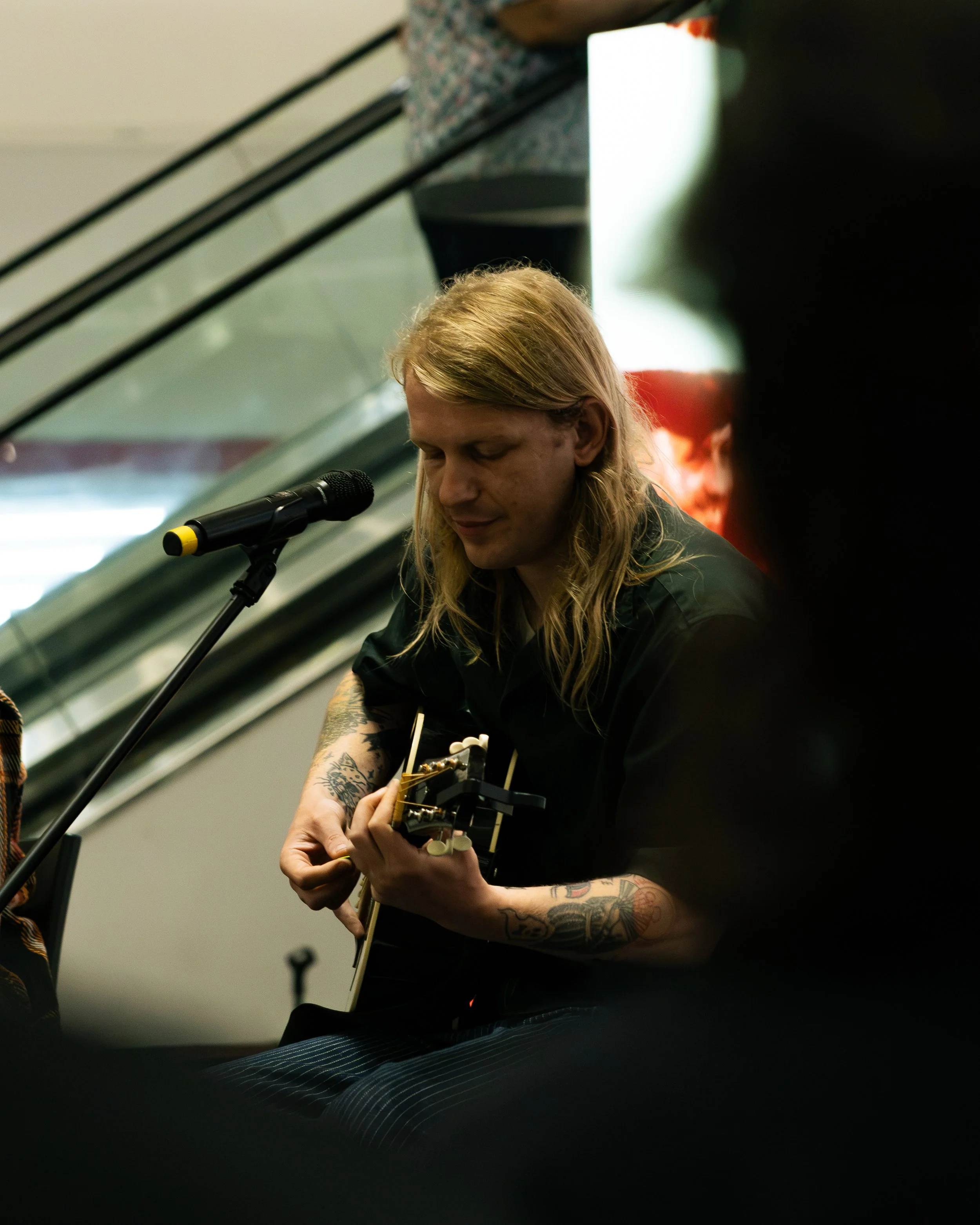
The Return of The Four: “This Is As It Is, or There Is No As It Is”

Four years after their last album, As It Is have returned with a record that could only have been made by the four people who started it. Released July 17 via FLG Records, As It Is brings Patty Walters, Alistair Testo, Benjamin Langford-Biss and Patrick Foley back together for their first full-length album as the classic quartet since 2018. But the significance of the reunion goes beyond simply putting the original lineup back in a room.
The band had wanted to make this record sooner. They had talked about what it could look like and whether there was still something worth building together, but wanting something and being ready for it were not necessarily the same thing.
“We wanted it to be the right time earlier than this, but it wasn't,” Walters explains. “What you want and what can be are sometimes different and that can hurt. I think we tried to make this moment happen earlier and differently. And for a myriad of reasons it just was not possible until it was in 2024.”
Even without the band, however, the four members never stopped being the four people who knew each other best.
“When there was no band, there was still the four of us as best friends and brothers,” Walters says. “We would just hang out and catch up and tell these, ‘Do you remember?’ stories that we talked about in one of the songs in the record and stuff. And there was just still love there. If there was no band, there was still going to be our friendship and our bond, which maybe matters more to all of us.”
That friendship ultimately made it possible to see what could happen if the band came back, first by getting onstage together and rerecording their first record in full, then by beginning work on what would become their fifth studio album.
The decision to call the album As It Is carries its own weight, particularly for a band whose identity has changed alongside its lineup over the years. For the members, the title became a statement about simply existing as the band they are now.
“It's definitely a statement of the record itself,” Biss explains. “It's definitely like a statement of just existence and this being who we are, having historically been a band with various lineup changes and stuff. So, yeah, this is As It Is, or there is no As It Is.”
Getting to this point required more than figuring out how to play together again. The band also had to figure out how to exist together differently than they had before. “Sometimes when you go through a romantic breakup, you're just not ready to put yourself out there again,” Walters states. “There's just a lot of hurt and trauma and reservation and hesitancy. And as much as we were sort of excited and optimistic about the idea of doing this again, there's a certain responsibility that you have to yourself to only do it when the time is right and when you're ready.”
For nearly a decade, the band had been the priority above almost everything else, and eventually that came at a cost. “We didn't really know how to care for ourselves, prioritize our personal lives and our relationships,” Walters says. “It was just band, band, band for nearly 10 years, which felt like the right decision and in hindsight, probably really wasn't, and that's why it wasn't sustainable.”
The reunion gave them an opportunity to approach the band with a better understanding of who they were outside of it, too. Walters describes learning how to “grow up and be okay for fuck's sake,” something that became just as important to the process as writing songs, touring or running the business of being in a band.
“And that's like the homework,” he explains. “When you're on tour, the performance is never longer than like, what, 90 minutes for us for a 24-hour day? So there's a lot of having to live with yourself and take care of yourself.”
That willingness to slow down and give themselves space also shaped the way they approached writing the record. Walters describes songwriting as four different perspectives slowly finding their way toward the same destination. “You're creating something tangible out of thin air ideas, and you also never know where it's going to go,” he expresses. “It's really funny when you have at least four brains, all sort of thinking that you know where the destination is. We're all seeing a slightly different one, but just little by little, we all just sort of collectively start to shape and mold this thing.” For Walters, that uncertainty is part of what songwriting actually looks like, including the ideas that do not work. “You just go like, ‘You know what, this felt like it might be a good idea.’”
That process also left room for things the band never intentionally planned, including the collaborators who became part of the record. Justin Klunk, The XCERTS and Espera each brought something different to the album, and in some cases, the circumstances surrounding their involvement completely changed what the band had originally planned. A saxophone player was supposed to come into the studio to work on the record, but when he became ill and could no longer make it, the band found themselves with very little time left to figure out another option. “It was like our second or if not the last day in the studio we'd had all together, so we were really cutting it fine,” Biss notes. “And we called our manager and we were like, we need a sax player. We're going to have to find someone.”
That search led them to Klunk, whom the band already admired through his work with The Midnight. He was on tour when they reached out, but agreed to help and promised to send material once he was back in Los Angeles.
What he sent was considerably more than they expected. “He sent, I'm not kidding, like at least 10 versions of each song,” Biss exclaims. “And we had to be like, well, this is all great. Like, it was all absolutely ripping. Like, there could be 10 different versions of ‘Live, Laugh, Love’ with like 10 different versions of saxophone.”
“It's just like Justin's version one, Justin's version two. You can make a whole album out of that,” Biss jokes. “And we had to sit there and pick out what were the best bits, really. And that was actually quite difficult because it was all amazing.”
The same level of care showed up in every other collaborator on the record as well. Espera contributed around 200 vocal tracks for one section, building the layered choir sound throughout “I’m So Alive!”. “Everyone that touched this record in any way just kind of went above and beyond for some reason,” Biss says with a smile. “Really, really put in a lot of effort and care and love for the project.”
“We wrote songs with people in bands that we've looked up to for years, like You Me at Six and McFly,” Biss adds. “And just to be in the rooms with these people... it's always great to just learn constantly, never stop learning.”
Some of the record's best moments also came from things the band never intentionally planned, including guitar sounds that emerged from the equipment itself and ended up staying in the recordings. “Some cool stuff on the record was kind of like a lot of happy accidents,” Testo says. “The guitar tone we had was just so crazy that it was all scratchy sounds and we were like, ‘What is that?’” Rather than clean those imperfections up, the band embraced them, with Testo noting that “being a bit more open to those sorts of happy accidents contributed a lot to the vibe.”
When it came time to choose the song that best represents where As It Is are now, Walters points to “Lose Your Way,” largely because it sits at the center of everything the record has to offer.
“When you release the first single and the first sort of glimpse into a record and a body of work, the objective is it feels a lot of the time to represent the entire record in a single song,” Walters explains. “And it is a diverse record. There's sort of faster, louder, but there's like softer, sweeter. But what is the one song that's sort of like the middle of the Venn diagram the most? It felt like ‘Lose Your Way.’ It's probably that.”
The diversity of the album is also tied to how differently the band approaches writing now. More than a decade into As It Is, they are no longer trying to figure out what kind of musicians they are. They are more comfortable knowing what works for them and, more importantly, who they are when they are making it.
“The first thing that comes to mind for me is, you know, we wrote at least three records about it before, like three of our 20s and things,” Walters says. “It's just, I really didn't like myself very much when we were doing the early records.”
That feeling influenced the way Walters approached writing at the time. “So I was trying to be a version of myself that other people would like, because I wasn't going to like me, but if they did, then there's at least a little bit of somebody thinking positive things about me,” he states.
“During the hiatus, I sort of found a charity job and got stuck in it, like therapy and got to get healthy and happy for the first real time in my life,” Walters expressed. “So now I can kind of write from a place of authenticity.”
“And now with nobody fucking liking it apart from the four of us, I'm cool with that,” Walters says. “Like, if nobody but the four of us liked this record, nobody connected with it, I would just be like, that is okay because I'm really proud of it.”
For Biss, part of that confidence comes from understanding the band's strengths instead of constantly trying to outrun them. “I think as well, just playing to our strengths now,” he adds. “Just really kind of knowing what you're capable of, what you're best at and not necessarily always doubling down on that, but, you say, we used to think comfort was a bad thing, a negative thing. I meant you were being safe, but actually there's something kind of beautiful in the comfort of just knowing who you are.”
That comfort also changed the physical method of recording. Rather than disappearing into an intense few-week period and forcing themselves to finish everything at once, the band approached the record in three parts, allowing time away between sessions.
“We kind of did it in three parts,” Testo says. “In the past, it's been a very intense period of a few weeks. There was more space when we were making, recording the record. And I think being able to kind of go away and come back, I felt like every time we started another week we were recording, I was excited to be there.”
Coming back with fresh ears meant they could hear the songs without being buried in the process of making them.
“Having that time away, you then essentially revisit the previous work that you've done,” Foley states. “And that's usually like a good barometer, because when you're in it every single day for weeks on end, sometimes it's very difficult to determine what is actually good and what isn't.”
“Having that break, you're able to come back in objectively, fresh ears, and relisten to what you had previously done,” Foley continues. “And I think pretty much in every case, it was like, ‘Oh, actually, yeah, this is pretty decent.’”
After everything that brought the four of them back into the same room, the biggest difference may be that they no longer have to force the band to be something it isn't. They can come back to it, make the record they want to make and, as Testo puts it, actually be excited to be there.
Photos and Interview by Bek Allegretti