
Butcher Babies Sound Better Than Ever on NIGHTBLOOM
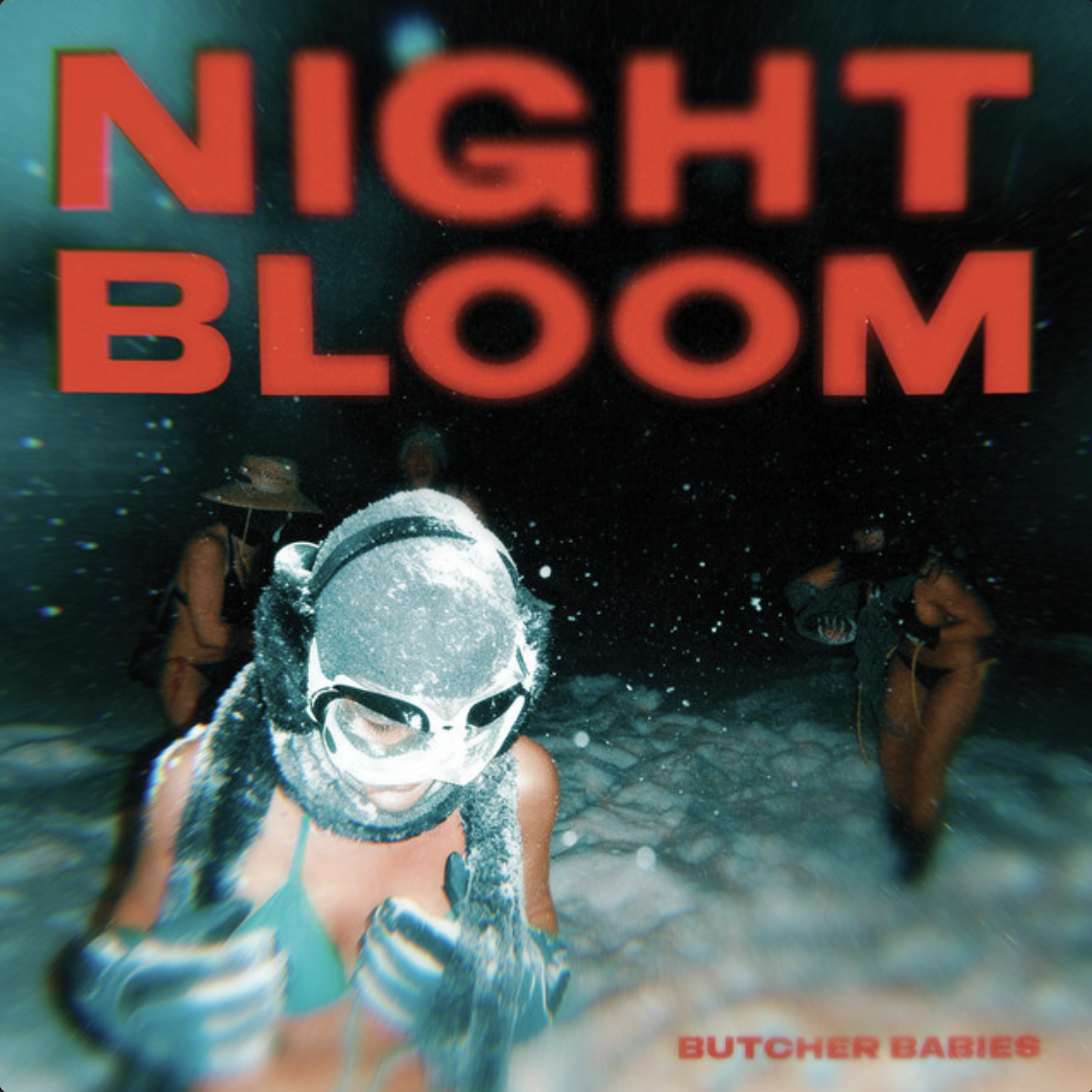
Heidi Shepherd wastes absolutely no time showing off on NIGHTBLOOM. “Lost in Your Touch” comes out swinging, and within the first few minutes, it is pretty clear this album will give her plenty of opportunities to scream her heart out. The opener is a fantastic representation of everything that makes the rest of the record work. The arrangement is big without swallowing the vocals, the lyrics give Shepherd a chance to let out her rage, and the whole thing has the kind of momentum that makes perfect sense as the album's first impression. It is a killer opener and an equally strong single, but more importantly, it tells you exactly what kind of ride these next 10 songs are going to be.
That energy carries straight into “Sincerity,” though the song takes things in a much grander direction. There is a dramatic quality here that brings to mind Evanescence, Avril Lavigne, or Halestorm, especially when Shepherd opens up vocally. “When you promised me the world / When you took away my fear / I was crying on your shoulder / Was any of it real?” immediately puts the song in the middle of a relationship that has already fallen apart, while “You played the martyr in a holy war” gives the anger a sharper edge. The chorus feels huge without losing the hurt underneath it, making “Sincerity” one of the album's prettier moments without taking away any of its bite.
The best moments on NIGHTBLOOM come from that kind of contrast. It can move from a huge, dramatic song into something aggressive without making either side feel out of place. “Blame It on the Wind” is much more interested in hitting hard, with a drum breakdown and screams that give Shepherd plenty of room to completely let loose. She is a total powerhouse throughout the album, but this is one of the first places where that really gets put on display. It also sounds like it was made for a stage, especially when that breakdown kicks in.
“Broken and Beautiful” takes that aggression and turns it into something a little more personal. The song starts with chaos, immediately dropping into an instrumental breakdown that could open up a pit within seconds, before Shepherd comes in with one of the album's strongest heartbreak anthems. “Oh, I'm beautiful when I'm broken” is the obvious centerpiece of the chorus, but the lines around it are what give it some weight. She follows it with “Know I said I wouldn't, but I did it,” then gets even more honest with “Maybe I'm not someone worth saving / 'Cause I'm tied to a ship that's sinking.” There is a lot packed into that chorus. She is trying to claim some ownership over the person she has become while also admitting how much of it is being kept hidden. The line about wearing a “permanent smile” while dying inside makes that contrast even clearer. The breakdown underneath all of it is the perfect match for the subject matter. It is messy, loud, and completely earned.
“Are You Waiting Up?” is where the album takes its first hard sonic turn. The synth that opens the song immediately changes the atmosphere, giving the record a different texture without making the shift feel random. After several heavier tracks, it is a smart place to pull back. The lyrics are quieter too, built around the kind of waiting that gets worse the longer it lasts. “The clock ticks louder as the silence grows” is a great opening because it makes the silence feel almost physical. Then “Your laughter haunts me in the softest way / Like a shadow dancing at the edge of day” brings in this delicate, gentle image for a song that is ultimately about wanting someone back.
The chorus keeps circling the same question: “Are you waiting up for my call? / Do you think of me at all?” The bridge gets even more direct with “Maybe I'm foolish / Maybe I'm blind,” before Shepherd repeats, “I'd give anything to make this right.” By the time she gets to the guitar solo, the song has built enough tension that the solo acts as a cathartic release.
“Black Clouds Over Georgia” brings a slight country twang into the album, which is a really cool change after the heavier tracks before it. The song also gets more interesting every time the chorus comes back around. Each one shifts a little as the story builds, so by the time Shepherd gets to “It was a big black cloud over Georgia / Still storming in her mind,” it hits harder than it did the first time. The final chorus takes it even further with “If there's beauty in the breaking / Then I guess we did it right,” a line that sounds almost like she is trying to convince herself of it. That tension is what makes the song work. There is something so beautiful about the way it is put together, but the lyrics never let you forget what is sitting underneath it.
“Fever in My Neck” wastes no time dragging the album back into heavier territory. This is where NIGHTBLOOM scratches the hardcore itch again, and Shepherd absolutely destroys it. “Trace me with your loaded tongue / If you make me pull I'll put you down” is aggressive from the start, while “Your hands around my throat / While you watch me sleep” takes the song somewhere much darker. The lyrics keep getting more chaotic from there, throwing serotonin, dopamine, ketamine, and gasoline into the same breath as Shepherd describes someone else's name being spit out in the middle of it all. Then comes the breakdown. Her delivery here is nothing short of incredible. It is one of those moments where the vocal performance completely takes over the song.
“Songbird” gives the album another interesting shift with its synth work. It’s one of the more unexpected production choices on the record, and it works because the electronics do not take away from the heavier side of the song. The screams cutting through the track give it Butcher Babies’ classic edge and keep the song from drifting too far away from the rest of the album.
“Leaving California” has a little bit of that Pierce the Veil-style production, especially in the background vocal elements, and it has the kind of energy that would make sense in the middle of a circle pit. At the same time, there is a surprising amount of breathing room here. That gives Shepherd another opportunity to show off her range, and she sounds great doing it.
The album comes to a close with “Black Dove,” and its flawless finish, because there’s never a reason to go out quietly. The song comes in aggressively and leans into the kind of anthem-ready chorus that the record has been building toward. “I'm a black dove, say it with your chest” is immediately memorable, while the back-and-forth of “Call me wrong / Call me sick / Call me poison / Take your pick” gives the chorus a confrontational sharpness. The repetition of “I'm a black dove / Say it with your chest” makes the whole thing feel like a challenge.
The breakdown is the final punch, giving “Black Dove” an ending that is every bit as aggressive as the rest of the song and the album.
The production is a big part of why NIGHTBLOOM feels so strong. Howard Benson, Joe Rickard, Neil Sanderson, and Henry Flury all had a hand in shaping the record, with Cameron Pierce Mizell and Evan McKeever joining in on “Songbird.” A lot is happening across these 10 songs, but the production never loses sight of Shepherd. It gives her plenty of room to go completely off without making the heavier moments feel like they are all fighting for attention. NIGHTBLOOM is an incredibly strong record for Butcher Babies, and the collaboration with Judge & Jury feels like a big part of why. The band sounds bigger without losing the parts that make them fun to listen to. If NIGHTBLOOM is any indication of what this partnership can bring out of Butcher Babies, there is plenty worth being excited about.
Review by Bek Allegretti