
Cartel Finds a Way to Make Frustration Danceable on Learning How To Cope
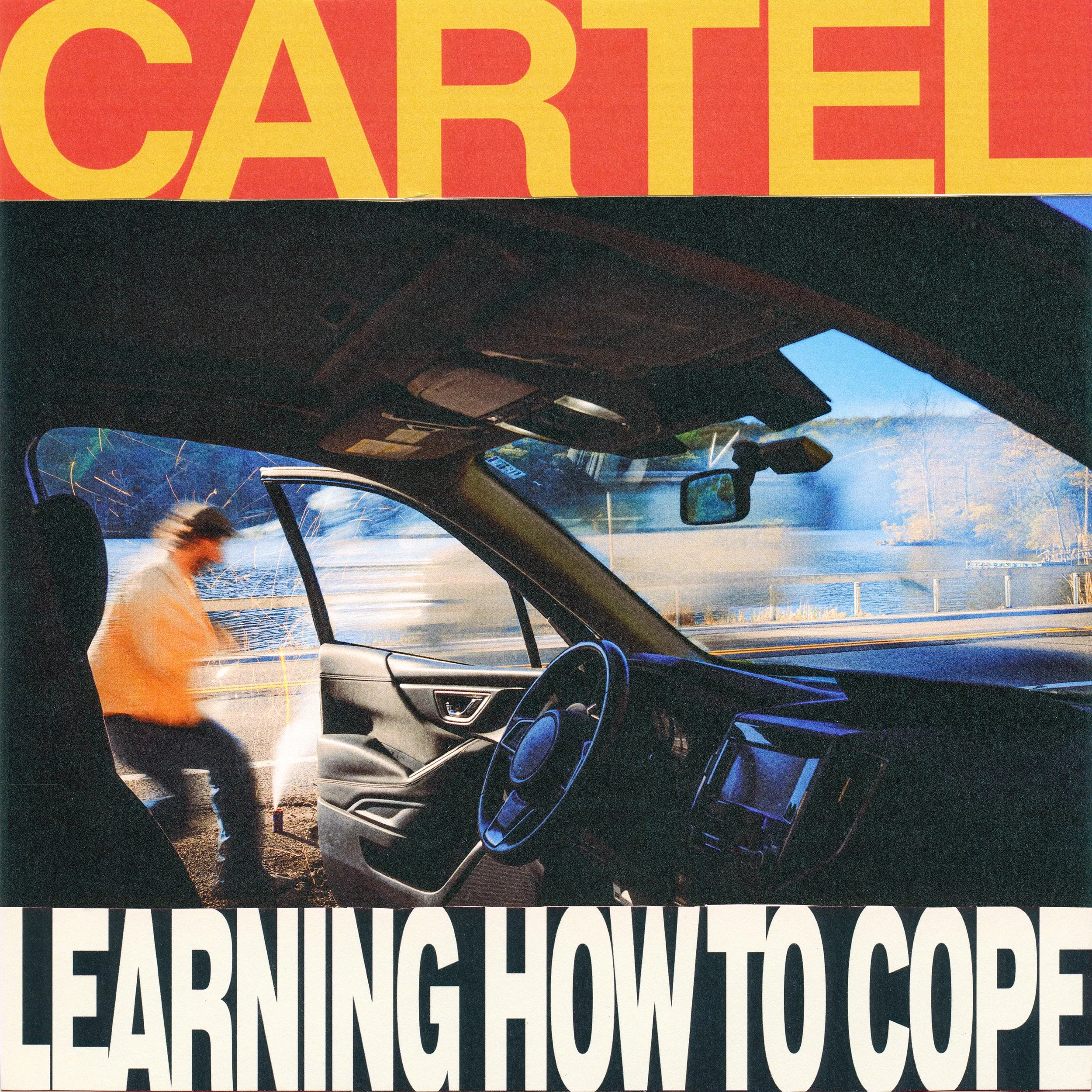
Cartel drops you right into the middle of the conflict from the very beginning on Learning How To Cope. “So it begins another day, another hustle / can we go again the same old shit the same old struggle” opens the album, and from there, the band makes it pretty clear what the next twelve tracks have in store. Their first album in 13 years, released September 18 through Field Day Records, makes no attempt to recreate what came before. Instead, Will Pugh, Joseph Pepper, Nic Hudson, Kyle Adams, and Kevin Mahoney come out swinging with a record that sounds remarkably sure of itself while taking a hard look at everything that makes getting through another day feel harder than it should.
And somehow, you can dance through almost all of it.
The balance is what makes Learning How To Cope so easy to get lost in. Cartel takes the heavy subject matter and gives it an outlet that is ridiculously easy to get caught up in. The album is packed with earworms, huge hooks, and moments that practically demand a room full of people screaming the lyrics back at the band, but there is plenty underneath that first instinct to jump around. The songs tackle frustration, betrayal, broken systems, violence, and the feeling of trying to make sense of a world that keeps getting harder to understand. However, Cartel never sounds weighed down by those subjects. There is a sense of self-assurance running through the entire record, because the band knows exactly what it wants to say and isn't interested in softening the message to make it easier to swallow.
For all of its heavier subject matter, Learning How To Cope still knows exactly how to have fun. “Deadbeat Drag” is an obvious standout, built around a hook that gets stuck in your head almost immediately and practically begs for everyone in the room to scream “It's just a deadbeat drag /Yeah, you swear to God it's not like that /But you're preying on a weakness we all have / It's such a bitch, this deadbeat drag” at the top of their lungs. It has the energy that could shake the floor during a live set, and it fits naturally into a record where nearly every track has its own reason to hold your attention. “Think Twice” hits that same sweet spot later in the album, with the kind of classic pop-punk chorus that makes you instinctively picture a crowd cathartically shouting every word: “You better think twice / don't let it all go to your head.” Sitting in the middle of the record, it gives the album a perfect shift in energy.
“Oxy Moron,” “Shirts & Skins,” “Give Or Take,” and “Deadbeat Drag,” were perfect choices to introduce the album before its release. “Oxy Moron” immediately captures the album’s ability to turn frustration into something infectious, especially in its chorus as Pugh sings, “looking on the upside, down to earth” and being a “faithful skeptic, working up the nerve.” That intensity carries into the bridge scream: “Catatonic, apathetic / Paranoid, apocalyptic / Catastrophic, hyperbolic” before landing on “Where's the void? It's giving panic.”
“Shirts & Skins” carries that same restless energy from its opening seconds with “Set it off, put it all in motion” before escalating into “Kick and scream and fight it / Think we'll start a riot / Tables turning violently.” Cartel has plenty to be angry about, but they sound like they're having a great time letting you know about it. Four singles could have easily given away the best moments of a record, but they’ve become an invitation into what Cartel has built with Learning How To Cope.
The record saves its biggest change in atmosphere for “Everything's Fine.” After an album that spends so much time moving forward with a punch, the closer pulls everything back. The production becomes softer and more stripped down as Pugh wrestles with his mind: “trying hard not to think about it, sometimes it gets to my head” before asking, “how did we get like this?” but reassuring, “I'm not giving up just yet.” It’s a melancholy way to end the record and a stark contrast to the opening, but it drives the message home in the best way possible. Learning How To Cope begins by throwing you directly into the fray, the anger. It ends with “rinse and repeat it” before a guitar solo carries the song into a fade out. The problems haven't magically disappeared, but neither has the resolve to keep going.
As a whole, Learning How To Cope is remarkably cohesive. Every song has its own identity, but nothing sounds like it wandered in from another album. Cartel gives each track room to stand on its own while keeping the record immersive as a whole. The production, pacing, hooks, and shifts in energy make it easy to listen straight through without reaching for the skip button. Even after the first few tracks have already established the sound, there is still enough variation to keep the album intriguing. It is the kind of record where you can put it on to dance around your room and, somewhere along the way, realize you have started paying closer attention to what Pugh is actually singing.
That second listen changes things. The first time through, Learning How To Cope is instinctive. You hear the hooks, you catch the rhythm, and before you know it you're singing along with your middle finger up at life. By the second listen, the lyrics start to land differently. The frustration behind the songs becomes harder to ignore, and the album's title starts to carry more weight. Cartel isn't pretending to have everything figured out, but they are working through what is happening around them in real time, and music gives them a way to turn that frustration into something tangible.
By the time the record fades out, its point is pretty clear. Cartel doesn't try to make difficult subjects easier by pretending they aren't difficult. There is frustration and uncertainty here, but there’s also plenty worth pushing back against. Learning How To Cope sounds like Cartel took thirteen years of frustration, experience, and perspective and turned it into something they could scream back at the world.
Review by Bek Allegretti