Lets Dance!
LolitsLea Discusses her New Release: Rollercoaster Tycoon

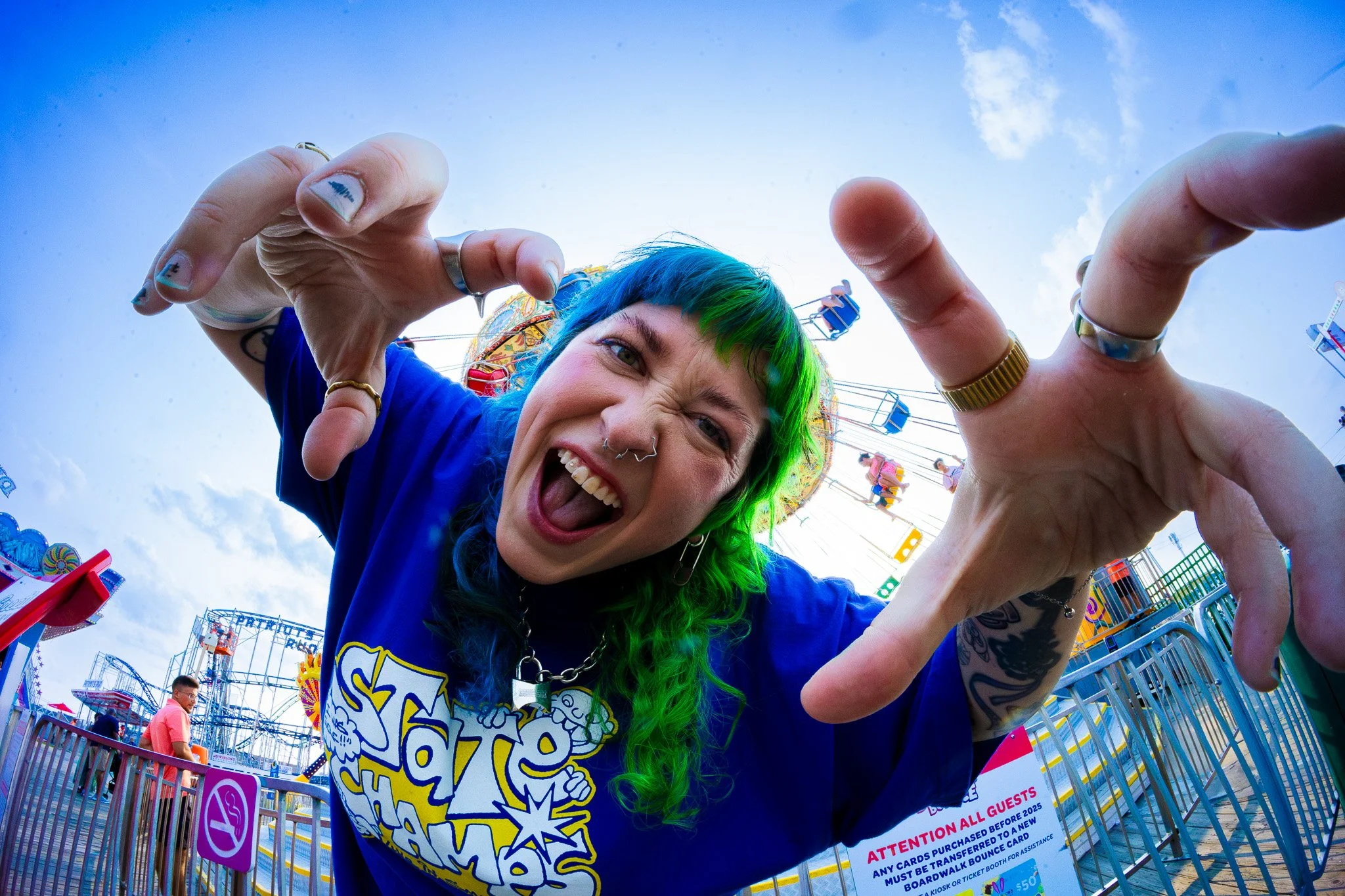
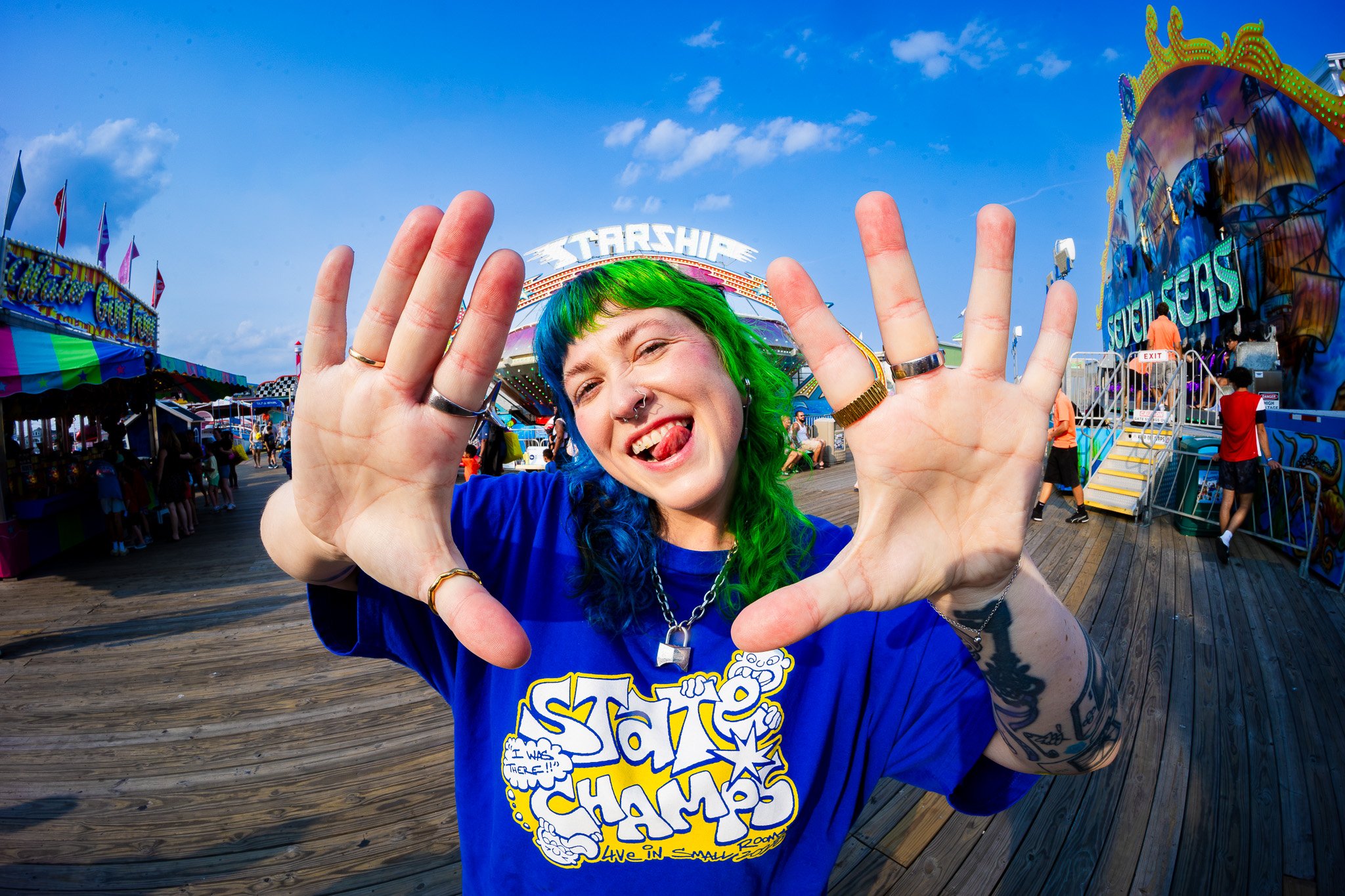
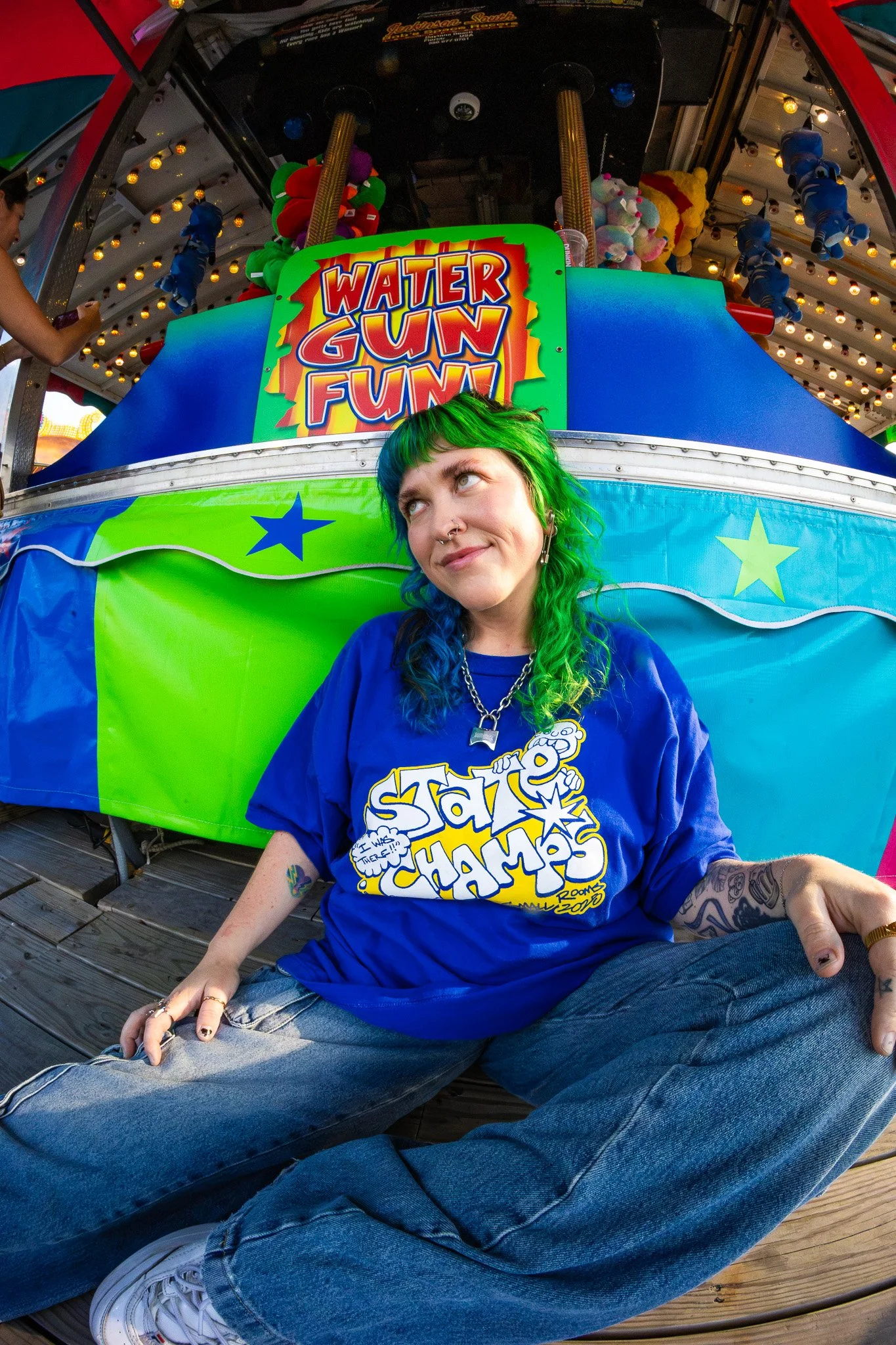
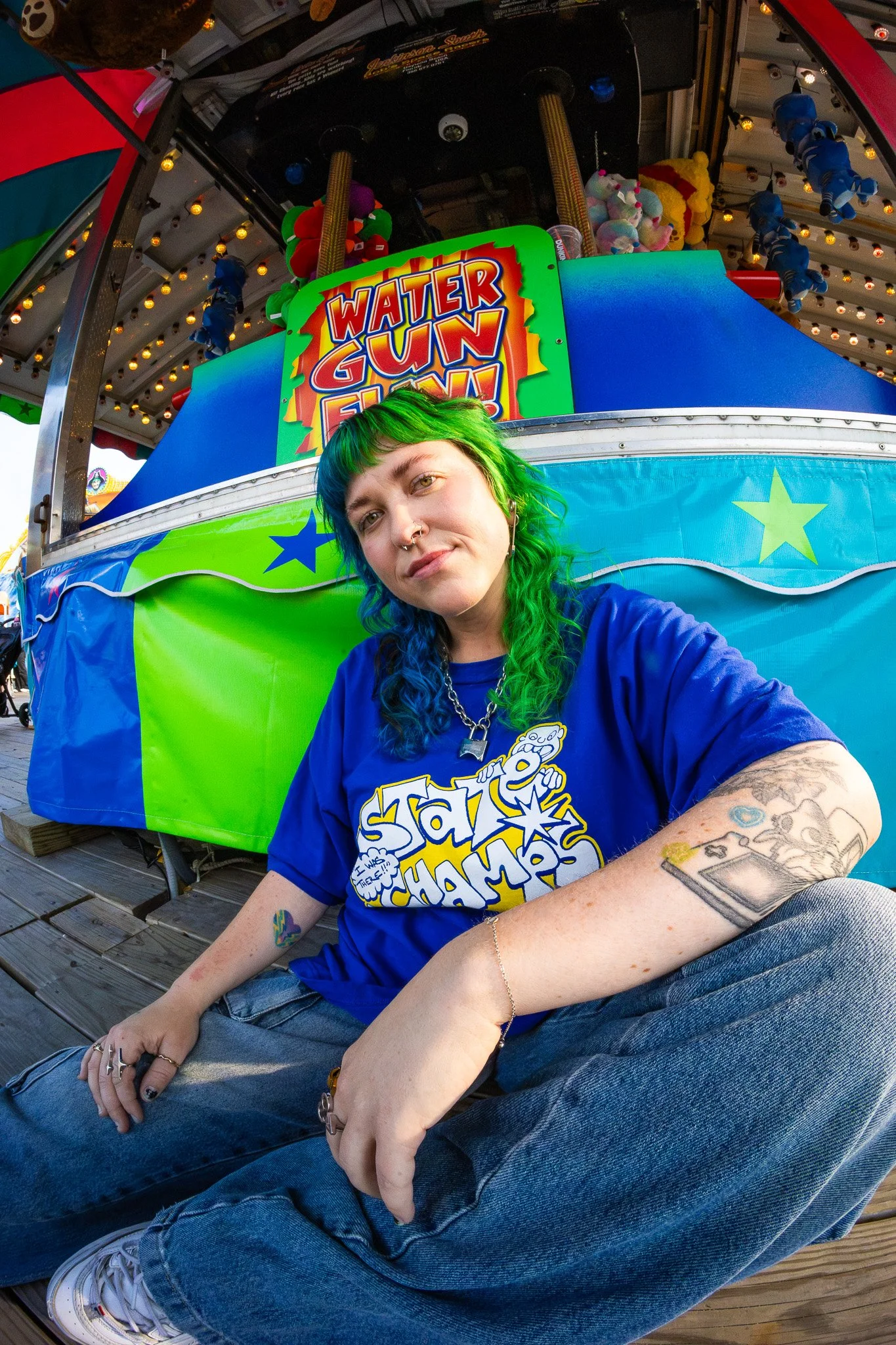
LolitsLea wants you to dance to the demise of her life. It’s a strange enough invitation to fit perfectly into the world she has built around RollerCoaster Tycoon, her sophomore album released September 15, where bright colors, video game references, and pop-punk nostalgia sit alongside songs about relationships, uncertainty, getting older, and the messier parts of figuring out what comes next.
“I want people not to take themselves too seriously when they're listening to it because we all go through a bunch of shit,” Lea explains. “But I feel like if we can have fun while we're doing it and have fun while we're experiencing the hardships of life, it makes it okay.” That is ultimately what she wants the album to do: connect with people lyrically but also become something physical once they leave her head and reach a crowd. “I can still turn that into a positive sound and get people jumping up and down at shows and dancing or moshing or whatever they're doing to the demise of my life,” she says. “At the end of the day, I hope we're all just dancing.”
That idea of turning personal experiences into something people can have fun with starts with where the album came from. “When I moved to Nashville from L.A., I was in this weird headspace of missing L.A. and regretting moving and just kind of not knowing where my life was going to go,” she states. She was working multiple jobs, bartending and trying to make music at the same time, and describes the period as “a very unsure place in my life.” She had multiple writing sessions while she was in Nashville, but this one produced something that immediately stood apart.
“We just started writing a silly song, and it turned into the song ‘RollerCoaster Tycoon,’ which was great,” she says. “But I didn't expect that to turn into my whole album being centered around RollerCoaster Tycoon.” Once the song existed, though, the idea of the album began to expand, especially as Lea realized how naturally the game connected to the visual identity she had already been developing. “I was kind of leaning into the video game thing because that had started to take on a lot of my brand identity, the colors and the campiness and the cartooniness of it,” she explains. “And then video games became a big part of my music.”
As the album grew, so did the world around it. “I didn't want it to be too carnival-like, but I wanted it to play off of carnival elements,” she clarifies. Lea's visual idea eventually moved beyond the carnival itself. She pulled inspiration from the art style of Jet Set Radio, a game she has never actually played but whose soundtracks she has spent plenty of time listening to. “I'm a little bit of a poser in that regard,” she laughs. “I don't think I ever owned a system or currently own a system that can play Jet Set Radio, so I would play it if I could, or maybe I'll figure out how to play it one day.”
The connection to the game itself, though, gave Lea another way to make the concept feel personal. Lea was drawn to the way RollerCoaster Tycoon allows players to create something carefully designed before destroying it through increasingly ridiculous decisions. “I think the fun thing about it is it actually is chaotic,” she expresses. “Similar to Sims, you can make roller coasters that crash and burn, and go into loops that literally fly off into the universe and never to be seen again.”
At the time she was building the concept, that kind of chaos felt familiar. “I felt like that was kind of a metaphor for my life at the time,” she explains. For Lea, it came from a very specific period of her life and gradually became a way of organizing the record around it. The cover art carries that same idea, taking the roller coaster imagery and combining it with the cartoonish, colorful world she had already established around her music and aesthetic.
That same process of turning what she was living through into something creative carries into the rest of the record. Much of RollerCoaster Tycoon comes from Lea trying to make sense of what she has experienced. There are songs about sadness, frustration, self-doubt, and relationships that never seem to settle, but writing about those things has also become part of how she works through them. “I'm making music to, I don't know, heal my inner child and have people resonate with it along the way,” she says.
After moving back home to Point Pleasant, Lea realized making the record from New Jersey brought a different set of challenges. “I was looking to work with new producers,” she shares. “I was kind of, for lack of a better word, shopping around for more collaborators and different producers that I got to work with.” Lea's search eventually led her back to Tony Pietrafesa, who would go on to produce 12 of the album's 16 tracks.
Her collaboration with Pietrafesa quickly proved to be the right fit. The first song Pietrafesa produced for Lea was “BURNOUT! BURNOUT!”, which was later released as the first single from the album. That song immediately gave Lea the reassurance of trusting her instincts. She had been chasing a sound influenced by bands throughout the project, but she didn’t have to spend hours explaining that reference point to Tony. “He knocked it out of the park,” she exclaims. “I'd been going by this Breathe Carolina theme for my whole album, and he understood it without me having to say nearly anything. I didn't have to send him a ton of reference tracks or give him a big, long description of why that type of music means a lot to me,” she shares. “He just knew because he loves it too and he's lived in that...He was the perfect fit for that album, and I want to keep working with him because it was just such a great collaboration and a good experience.”
Pietrafesa was not the only collaborator who brought a personal connection to the album. Cassadee Pope appears on “Wish I'd Known.” “[Cassadee’s] such a role model to me and a big sister energy and has always given me incredible advice,” Lea mentions. “So to have her be a small part of this album was amazing.” Jack The Underdog joined her for “Tragedy”: “His fanbase and mine crosses over a lot, but he's also just like doing the same kind of genre and style of music that I really love,” Lea says. “And he's in my friend group out in Nashville, so it was really nice to be able to collaborate with him on that.”
She also brought K Enagonio into the album for “Sleep Over,” to help bring to life her idea for a screaming element she wanted on the final song. Once again, she found someone who understood the reference point almost immediately. “[K was] like, ‘Yeah, I feel like you're going for this Breathe Carolina style,’ and I didn't even tell them that,” Lea says. “I was like, oh my God, how did you know? Does it actually sound like that? That's amazing.”
With the outside collaborators in place, Lea's attention still remained on how all of those pieces fit together. Her records are intentional, with the sequence reflecting the order in which she experienced and developed the songs. “My albums are very linear,” she notes. “So, the track order is really intentional. I created them when they were put in the tracks. So, I don't have to think about the order of an album because they mostly all align the way I write them.”
That sequencing also reflects how closely the songs are tied to where Lea was in her life when she wrote them. Lea admits the question of which song means the most to her is difficult because she could explain why she loves every track. However, one has become particularly relevant as she has continued living with the record and changing alongside it. “I can go on a tangent of why I love every song; they all mean so much to me,” she says. “Other Side Of My Window” stands apart because of how closely it reflects the person she is now. “That's kind of how I feel about hookup culture and relationships and getting older and being 31 and being single and not kind of finding that forever partner and being on the road, so I don't have time, et cetera, et cetera,” she says. “I find myself in situationships and all over the goddamn country because I'm everywhere all the time and everything's kind of fleeting and I don't love that.” The song became a place to put all of those thoughts without trying to clean them up first. “It's just a word vomit diary of my mind, my brain thoughts,” she says. “I feel like that one's a good answer right now because it's the one that's closest to the version of me now that I'm speaking from.”
After spending years making those decisions and living with the record, the focus is finally shifting toward its release. “I feel like after that time has passed, I'm just ready for everyone else to hear this because I've been listening to these songs for three years,” she states. “Once it's out, I can just let it exist.”
After spending years writing, recording, sequencing, designing and preparing RollerCoaster Tycoon, Lea is finally ready to stop explaining it and let people experience it for themselves. She has already spent enough time with the record. Now she wants to see what happens when everyone else starts dancing.
Photos and review by Bek Allegretti